Delhi's real estate is booming. Four-floor residential buildings, bustling commercial complexes, hospitals, schools. Elevators are no longer a luxury. They're infrastructure. And yet, getting a straight answer on pricing feels like pulling teeth.
Let me break it down for you, simply and honestly.
What Actually Determines Lift Cost in Delhi?
Here's the thing most salespeople won't tell you upfront: there's no single "standard" price for a lift. The final number depends on a combination of factors, and understanding these will help you ask the right questions and avoid getting overcharged.
Type of lift is the biggest variable. A basic hydraulic lift for a three-floor home costs very differently from a machine-room-less (MRL) traction elevator for a commercial building. That's just the starting point.
Number of floors and stops directly impacts structure, cabling, and controller complexity. More stops mean more cost. It's that simple.
Cabin size and capacity matter too. A 6-person passenger lift has a much larger footprint than a small home lift designed for 2 to 3 people. The steel structure, motor size, and safety components all scale up accordingly.
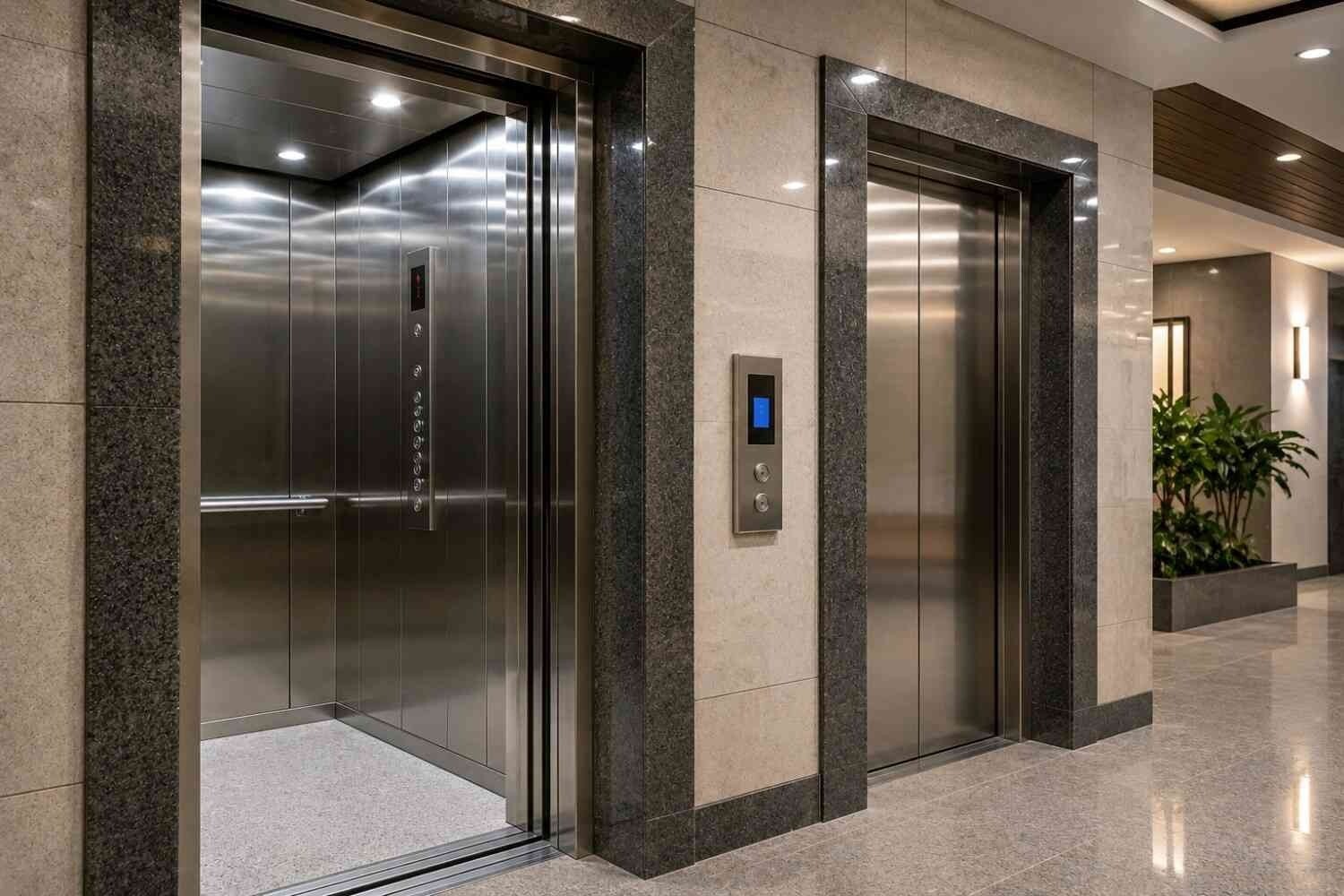
In my experience, most buyers underestimate how much the cabin finishing can swing the final number. Glass panels, stainless steel interiors, wooden flooring inside the cabin. These are aesthetic choices that can add significant value or cost, depending on what you pick.
Other factors include:
- Pit depth and headroom: older buildings sometimes need civil modification
- Door type: automatic sliding doors versus manual collapsible gates
- Drive system: gearless traction, geared traction, or hydraulic
- Brand of components: Indian vs. imported motor, controller, and safety parts
- Installation complexity: shaft condition, floor-to-floor height, local site access
Types of Lifts and Their General Cost Factors in Delhi
Home Lifts (Residential Elevators)
Residential lifts in Delhi are increasingly common, especially in independent houses and low-rise apartments. These are designed for light use, typically 2 to 4 passengers.
I've noticed that families often choose hydraulic or pneumatic home lifts when the building already exists, because they require minimal structural modification. For new constructions, a compact traction lift is usually more efficient and space-saving.
Home lifts vary significantly based on cabin size, drive system, and finishing quality. The shaft can be constructed in brick, MS structure, or glass. Each option affects both aesthetics and the overall project cost.
Passenger Lifts for Commercial Buildings
This is the most common category for offices, hospitals, malls, and multi-storey residential complexes. Passenger lifts need to handle higher traffic, comply with Bureau of Indian Standards (BIS) norms, and carry heavier loads.
According to industry data from the Lift and Escalator Manufacturers' Association of India, MRL (Machine Room Less) traction lifts have become the dominant choice in urban commercial buildings over the last decade. The main reasons are energy efficiency and a smaller mechanical footprint.
For Delhi specifically, where buildings are dense and floor space is expensive, MRL lifts make strong practical sense.
Goods Lifts and Service Elevators
If you're running a warehouse, factory, or commercial kitchen, a goods lift is a different category entirely. Load capacity here ranges from 500 kg to several tonnes. The structure is heavier, the motors are more powerful, and the control systems are built for durability over aesthetics.
Important note: Never try to repurpose a passenger lift for goods movement. It's a safety risk and a maintenance nightmare.
Car Parking Lifts
Delhi's parking crisis has pushed many builders toward vertical parking systems. Car lifts and stackers are increasingly being installed in basements and tight urban plots. These are highly specialised systems with their own engineering requirements.
Carry Max Lifts, based in Faridabad and serving Delhi NCR, has been involved in several such installations, both for residential complexes and standalone commercial buildings.
Hidden Costs Nobody Warns You About
This is where a lot of buyers get surprised, and it's worth taking a moment here.
When I tried to get quotes for a client's four-floor building a few years ago, the initial numbers looked manageable. Then the real picture emerged.
Civil work: If your building doesn't have a shaft, you're looking at construction costs that can be substantial. This is often not included in lift vendor quotes.
Electrical work: A dedicated power supply, earthing, and sometimes a transformer upgrade may be needed. Always ask if this is included in the quote you receive.
Annual Maintenance Contract (AMC): Once the warranty period ends, you'll need an AMC. A good AMC covers preventive maintenance, emergency callouts, and parts replacement. Skipping this is a false economy.
Government compliance: In Delhi and the NCR region, lifts need to be registered with the state electrical inspectorate and undergo periodic inspections. There are fees involved, and non-compliance can mean fines.
Modernisation later: Older lifts installed without proper specs often need expensive retrofits within 5 to 7 years. Buying right the first time saves real money in the long run.
How to Compare Lift Quotes in Delhi Without Getting Confused
Getting multiple quotes is smart. But comparing them requires knowing what to look for.
Here's a quick checklist:
- Is the quote turnkey or supply-only? Turnkey includes installation; supply-only doesn't.
- What brand are the motor, controller, and door components?
- What is the warranty period and what does it actually cover?
- Is the cabin finishing included, or is that extra?
- Does the price include shaft construction or civil modifications?
- What certifications does the vendor hold? Look for ISO certification and BIS compliance.
- Is an AMC included for the first year?
A reputable company will answer all of these without hesitation. If a vendor gets evasive about specifications or tries to rush you into a decision, that's your cue to look elsewhere.
Carry Max Lifts provides detailed technical specifications with every quote, which makes the comparison process much cleaner for buyers.
Lift Cost in Delhi: Residential vs. Commercial Key Differences
| Factor | Residential Lift | Commercial Lift |
|---|---|---|
| Typical Capacity | 2 to 8 persons | 8 to 20+ persons |
| Duty Cycle | Light (occasional) | Heavy (continuous) |
| BIS Compliance | Required | Mandatory and stricter |
| Cabin Finishing | Customisable | Standard to premium |
| Motor Type | Hydraulic or light traction | MRL or geared traction |
| AMC Complexity | Lower | Higher |
Understanding these differences helps you avoid over-specifying (paying for more than you need) or under-specifying (buying a system that breaks down quickly under real-world use).
Why Delhi's Geography and Infrastructure Matter for Lift Installation
Delhi's building stock is wildly varied. You have sprawling South Delhi bungalows, densely packed Laxmi Nagar apartments, and modern Aerocity office towers, all within the same city.
Power reliability is a real consideration. Frequent outages in parts of Delhi mean that a good lift should come with an automatic rescue device (ARD) that brings the car to the nearest floor and opens the doors during a power cut. This is not optional. It's essential.
Seismic considerations also apply. Delhi falls in Seismic Zone IV, which means structural design must account for earthquake loads. Any reputable lift company in Delhi will factor this into their structural calculations.
Final Thoughts
Figuring out lift cost in Delhi isn't about finding the cheapest quote. It's about understanding what you're actually buying and making sure it serves you safely and reliably for the next 20 years.
Ask the right questions. Get turnkey quotes. Check certifications. Work with a company that's willing to be transparent about specifications and compliance.
If you're in Delhi NCR and want a detailed assessment, Carry Max Lifts has a team that handles projects across the region, from small residential installations to large commercial projects. Getting a proper site evaluation done before you compare prices will save you time, money, and a lot of headaches.