The architectural landscape of modern residential homes is rapidly changing. Urban spacing demands creative structural engineering, prompting homeowners and real estate developers to maximize every square meter of carpet area. When integrating vertical mobility into premium bungalows, duplex apartments, and multi-generational villas, traditional elevator configurations present significant spatial challenges.
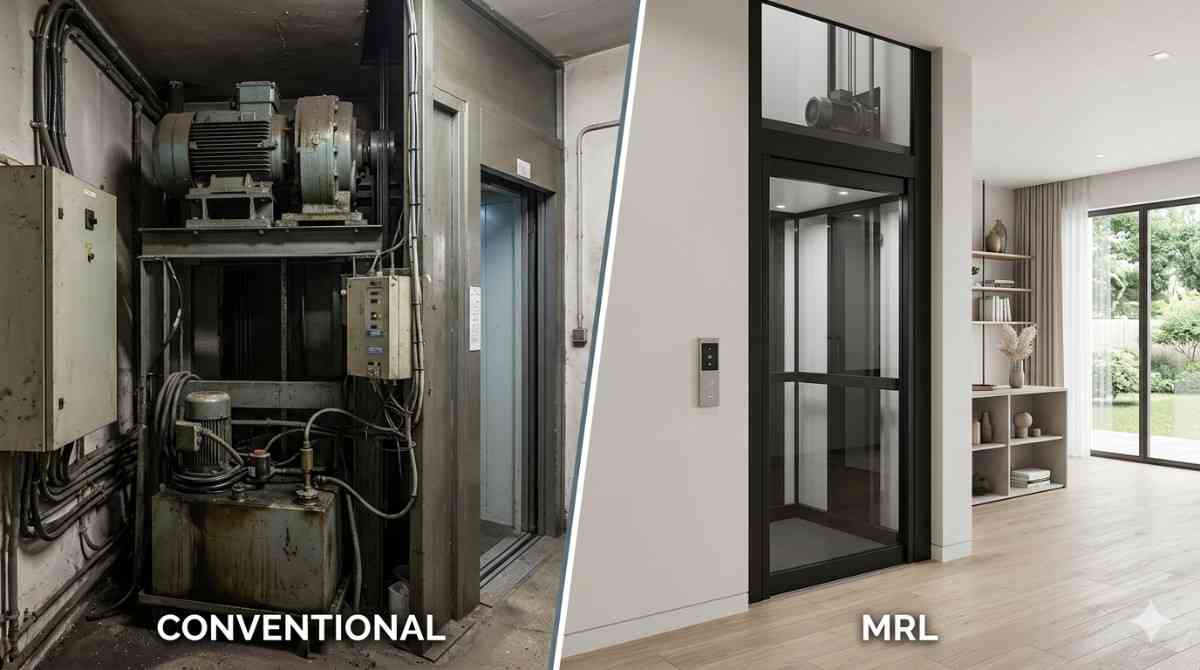
Historically, incorporating an elevator required a dedicated, bulky concrete room directly above the hoistway to house heavy motors, control panels, and electrical switchgear. Today, homeowners are moving away from these restrictive, old-school designs.
When planning modern home infrastructure, selecting the right drive technology for your residential lifts is critical. Machine Room-Less technology represents a major evolutionary leap in vertical transportation. By packaging compact, high-efficiency gearless traction mechanisms directly inside the existing lift shaft, this engineering approach removes the need for a separate penthouse structure.
This technological paradigm shift optimizes residential design by saving space, reducing energy usage, and lowering structural costs. This comprehensive analysis details why Machine Room-Less engineering has become the definitive choice for premium home elevator integration.
Quick Answer: Why MRL Technology Outperforms Traditional Residential Layouts
Machine Room-Less systems locate the compact gearless traction machine and control systems directly within the lift hoistway, rather than in a separate concrete room above the shaft. By eliminating the traditional overhead engine room, MRL residential lifts reduce structural roof loads, eliminate the risk of oil leaks found in hydraulic setups, and lower power consumption by up to fifty percent. This makes them highly efficient and space-saving solutions for modern multi-story homes.
The Core Challenge: The Structural Cost of Traditional Machine Rooms
Traditional elevator systems pose several architectural challenges when planned for private residences. Conventional traction elevators require a dedicated concrete room directly above the vertical shaft to accommodate the bulky geared motor block and electrical switchgear. Similarly, old-school hydraulic systems require an auxiliary machine room or massive metal cabinet on the ground floor to house hydraulic oil pumps, reservoirs, and control blocks.
For a homeowner, building an overhead machine room creates several distinct disadvantages:
Aesthetic Disruption: A concrete penthouse block protruding above the terrace level disrupts clean architectural rooflines and vertical exterior aesthetics.
Structural Strain: Concentrating heavy mechanical machinery at the absolute top of the lift shaft requires reinforced concrete columns and deep beams to manage heavy loads, increasing structural engineering costs.
Zoning Compliance Pressures: Many municipal building guidelines restrict the total height of residential structures. Allocating height to a non-habitable mechanical room can conflict with local regulatory height caps.
Civil Work Complexity: Building a weatherproof, ventilated, and accessible concrete room at the highest point of a residential property adds complexity to civil construction timelines.
MRL technology solves these architectural challenges by integrating the mechanical drive unit directly into the lift shaft, removing these structural requirements completely.
Architectural Comparison: MRL Traction vs Hydraulic Systems
When researching premium residential elevator solutions, homeowners typically choose between two main internal technologies: hydraulic drives or Machine Room-Less traction setups. Understanding their engineering differences is crucial for making an informed long-term investment.
Hydraulic Lift Mechanical Systems
Hydraulic residential systems move the elevator car using a piston pump that pushes fluid into a steel cylinder. While they do not require an overhead room, they have notable drawbacks for modern domestic environments. Hydraulic systems rely on large volumes of specialized oil, which can degrade over time and emit distinct chemical odors that seep into residential living spaces.
Furthermore, hydraulic pumps require high startup current, leading to higher monthly electricity bills. There is also a long-term risk of underground or joint leaks, which can damage home foundations or basement floors.
Machine Room-Less Traction Systems
MRL technology uses a compact, permanent-magnet synchronous gearless motor mounted directly onto the structural guide rails at the top of the shaft. The lift car is suspended by high-strength steel cables or polyurethane-coated steel belts. This system replaces the bulky mechanical gearbox with a direct-drive arrangement, reducing the motor size to a fraction of traditional units.
Because the machinery sits within the unused clearance space at the top of the hoistway, the structural footprint matches the shaft size exactly. This allows architects to design clean, continuous roof terraces without mechanical obstructions.
Key Advantages of MRL Technology in Private Homes
1. Maximizing Usable Space and Carpet Area
The main benefit of choosing an MRL setup for residential lifts is the complete preservation of architectural square footage. In dense urban developments where land prices are high, saving even a small area from mechanical equipment provides valuable space for a walk-in wardrobe, an extra storage pantry, or an open terrace garden.
2. Higher Energy Efficiency
MRL systems feature advanced permanent magnet synchronous motor technology. Because these motors operate without a mechanical gearbox, energy losses from friction are minimal. Unlike hydraulic options that run pumps at full capacity to lift loads, MRL drives use smart variable frequency controls that draw minimal power. This allows them to run smoothly on standard domestic single-phase or three-phase power lines, keeping electrical infrastructure needs simple.
3. Smooth Ride Quality and Quiet Performance
In a private home, noise control is essential for a comfortable living environment. Geared systems and hydraulic pumps generate low-frequency hums and vibrations that can transfer through walls into nearby bedrooms or lounges. MRL gearless motors operate with minimal mechanical friction, delivering ultra-quiet vertical travel. Passengers experience smooth acceleration and deceleration, free from the jerky movements common in older elevator designs.
4. Eco-Friendly, Fluid-Free Design
Because MRL systems use a gearless traction design, they do not require regular oil changes or hydraulic fluid management. This eliminates the risk of oil leaks, making it a clean and eco-friendly option for residential spaces.
Civil Work and Integration Guide for Home Renovations
Introducing vertical mobility into an existing multi-story home requires careful structural planning. Traditional elevator designs often present major challenges during retrofitting due to their significant civil construction needs. MRL technology, however, simplifies the integration process for existing homes.
When managing a residential elevator installation using MRL technology, the onsite civil work involves a few straightforward steps:
Shaft Framework Construction: If the house lacks an internal concrete hoistway, engineers can build a self-supporting structural steel glass shaft. This frame can sit in a courtyard, a stairwell opening, or along an exterior wall.
Shallow Pit Setup: MRL designs require minimal pit depth, typically between three hundred and four hundred and fifty millimeters, minimizing the need for deep excavation near home foundations.
Overhead Clearance Utilization: The drive motor sits within standard top-floor ceiling heights, requiring no structural modifications to the roof.
Control System Integration: The main control panel is housed in a slim, lockable stainless steel cabinet built directly into the top-floor door frame, keeping it accessible for maintenance while saving floor space.
Debunking Common MRL Elevator Myths
As MRL systems become the preferred choice for residential lift installations across India, several common misconceptions persist among homeowners and contractors. Clarifying these technical myths helps highlight the practical value of modern gearless systems.
Myth 1: Maintenance is difficult without a dedicated machine room
Fact: A common concern is that technicians will struggle to service components located inside the lift shaft. However, modern MRL systems are engineered with service accessibility in mind. Maintenance personnel perform routine inspections directly from the top of the elevator car using safe, manual control systems. Electrical diagnostic terminals are integrated into the upper floor door frames, allowing technicians to test and configure systems safely without entering the hoistway.
Myth 2: MRL traction systems cost significantly more over time
Fact: While the initial purchase cost of an advanced gearless traction system can be slightly higher than a basic hydraulic setup, it offers clear long-term savings. Homeowners see lower ongoing expenses due to reduced electricity usage, minimal component wear, and the elimination of expensive hydraulic oil replacements. This makes MRL technology a cost-effective choice over its operational life.
Myth 3: MRL elevators are unsafe during residential power cuts
Fact: Safety remains a top priority in residential elevator design. Some believe that lacking a mechanical machine room makes manual rescue operations difficult during a power failure. In reality, high-quality MRL systems come equipped with advanced, automated backup electronics.
An Automatic Rescue Device is standard on these systems. In a power outage, the ARD instantly switches to battery power, safely moves the lift car to the nearest landing, and opens the doors to let passengers exit safely.
Why Choose CarryMax Lifts
Selecting the right partner for your residential elevator installation is just as important as choosing the underlying technology. CarryMax Lifts delivers advanced vertical mobility solutions engineered specifically for modern residential architectural requirements.
As an established passenger lift manufacturer, CarryMax Lifts combines precision engineering with tailored design flexibility:
Expert Manufacturing Quality: Our state-of-the-art production facilities utilize advanced automated machinery to build reliable, high-performance elevator components.
Tailored Customization: We offer versatile design options, including panoramic glass observation cabins, hidden shaft profiles, and premium interior finishes that complement your home decor.
Strict Safety Compliance: Every system we build meets or exceeds rigorous elevator safety standards India, featuring multi-layered mechanical brakes, full-height infrared light curtains, and dependable Automatic Rescue Devices.
Comprehensive Lift Maintenance Services: Our dedicated engineering teams provide regular preventive maintenance, rapid diagnostic support, and genuine replacement parts to ensure continuous performance.
Strong Service Footprint in Delhi NCR: With a responsive technical support network across Delhi, Noida, Gurgaon, and Faridabad, our local teams ensure smooth installation and prompt service.
Whether you need a new commercial lift installation or a premium residential elevator solution, CarryMax Lifts provides expert guidance from initial structural planning through to final handover.
Summary of Modern Residential Lift Technology
Integrating a modern elevator into your home is a long-term investment that enhances daily convenience, improves property accessibility, and adds structural value. Machine Room-Less technology provides a superior alternative to traditional elevator designs by removing the need for an overhead concrete penthouse, reducing energy use, and offering smooth, quiet performance.
By choosing an MRL gearless traction system, you optimize your home's layout, lower long-term maintenance needs, and enjoy a cleaner, fluid-free installation. When upgrading your home's vertical mobility, working with an experienced manufacturer ensures a seamless process from design through to installation.
Connect with the engineering team at CarryMax Lifts today to discuss your project requirements, explore custom cabin designs, and receive a comprehensive, tailored technical proposal for your residential space.