What Is a Residential Freight Elevator and Why Do You Need One
Picture this. You just bought a brand new sofa for your third floor bedroom. Four men are struggling to carry it up the staircase. Walls are getting scratched. Everyone is exhausted. And at the end of it all, someone suggests you should have just bought a smaller sofa.
Sound familiar?
This is a problem that thousands of homeowners across Delhi NCR face regularly. And the solution is simpler than most people think. A residential freight elevator handles exactly this kind of situation without the drama, the damage, or the physical strain.
If you have never heard of a residential freight elevator or are not sure whether you actually need one, this beginner guide covers everything from what it is to why more Indian homeowners are installing them today.
What Exactly Is a Residential Freight Elevator
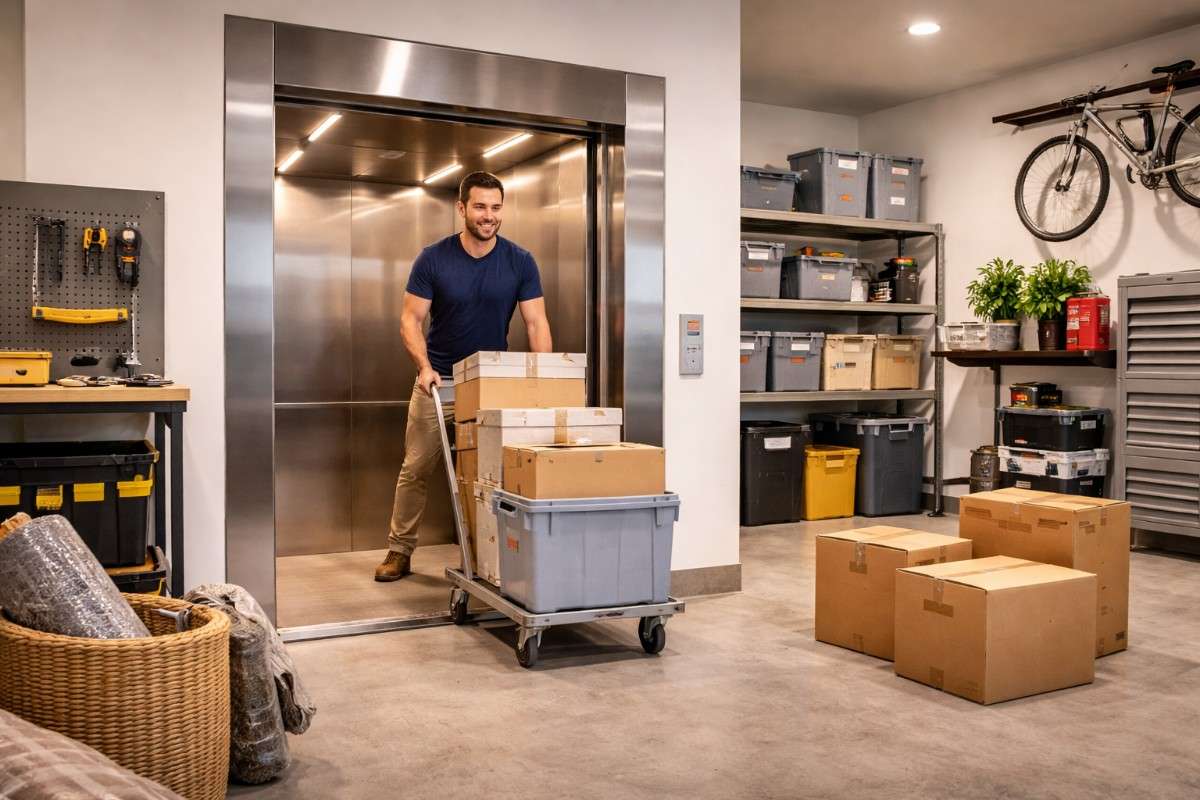
A residential freight elevator is a lift system installed inside a home or private residential building specifically designed to carry heavy goods, furniture, luggage, groceries, and other bulky items between floors. Unlike a standard passenger elevator that focuses on carrying people comfortably, a freight elevator is built for load capacity, durability, and practical everyday use.
It is not a dumbwaiter. A dumbwaiter is a small platform designed for carrying food or small items between floors. A residential freight elevator is significantly larger, stronger, and capable of carrying items that weigh several hundred kilograms.
In simple terms, if you have a multi-story home and regularly deal with the challenge of moving heavy or bulky things between floors, a residential freight elevator is built for exactly that purpose.
Who Actually Needs a Residential Freight Elevator
This is the question most homeowners ask. Let us be specific about the situations where a residential freight elevator genuinely makes a difference.
You need one if your home has three or more floors and you regularly carry heavy items upstairs. This includes furniture, appliances, luggage, grocery bags, or even equipment for a home office or gym.
You need one if someone in your household has mobility limitations. A residential freight elevator can double as a support lift for elderly family members or individuals with physical disabilities who struggle with stairs, especially when carrying anything in their hands.
You need one if you run a home-based business. Many homeowners in Delhi, Noida, and Gurgaon operate small businesses from their residences. If you regularly receive deliveries, store inventory, or move stock between floors, a freight elevator saves enormous time and effort every single day.
You need one if you live in a villa or independent house with a basement. Basements are commonly used for storage, gyms, or utility rooms. Carrying items up and down from a basement manually is inconvenient and physically demanding over time.
You need one if you are building a new home and want to future-proof it. Installing a freight elevator during construction is far easier and more cost-effective than retrofitting one later.
Residential Freight Elevator vs Passenger Home Lift: What Is the Difference
Many homeowners confuse a residential freight elevator with a standard home passenger lift. While both serve vertical transportation needs, they are designed for very different purposes.
Feature | Residential Freight Elevator | Passenger Home Lift Primary Purpose | Carrying goods and heavy loads | Carrying people between floors Load Capacity | High, typically 300 to 1000 kg | Lower, typically 150 to 400 kg Cab Size | Larger and more open | Compact and enclosed Interior Finish | Functional and durable | Aesthetic and comfortable Speed | Moderate | Smooth and consistent Best For | Furniture, appliances, luggage | Daily passenger use
The key takeaway is that a residential freight elevator is not a replacement for a passenger home lift. Many homes in Faridabad and across Delhi NCR install both, using the freight elevator for heavy goods and a separate passenger lift for daily family use.
Types of Residential Freight Elevators
Understanding the types available helps you make a smarter choice for your home.
Hydraulic Freight Elevator
This is the most popular choice for residential use in India. A hydraulic freight elevator uses a fluid-driven piston system to move the platform up and down. It is known for its smooth operation, high load capacity, low noise, and relatively simple maintenance. For homes in Delhi NCR where power fluctuations are common, hydraulic systems offer added safety because the platform holds its position naturally during a power cut.
Traction Freight Elevator
A traction-based freight elevator uses steel cables and a motor to lift the platform. It is better suited for homes with more floors where higher travel speed is needed. However, it typically requires a machine room and involves more complex installation compared to hydraulic systems.
Platform Lift or Vertical Platform Lift
This is a simpler, open-platform solution designed for shorter travel distances, typically up to two or three floors. It is compact, easy to install, and works well for homes where the primary need is moving goods between just two levels such as ground floor to first floor or basement to ground floor.
Real Problems a Residential Freight Elevator Solves Every Day
Let us talk about the actual day-to-day problems this equipment eliminates for homeowners.
Problem 1: Moving furniture during redecoration or renovation. Every few years, homes get redesigned. Beds, wardrobes, dining tables, and sofas need to move between floors. Without a freight elevator, this becomes a labor-intensive, wall-damaging exercise every single time.
Problem 2: Carrying heavy grocery loads in large households. Families with elderly members, young children, or domestic staff in multi-story homes in Gurgaon and Noida deal with this challenge daily. Heavy grocery bags, water cans, and bulk kitchen supplies being carried up multiple flights of stairs is a genuine safety and convenience issue.
Problem 3: Managing home gym or hobby equipment. Treadmills, weight benches, large musical instruments, and photography equipment are bulky and heavy. Moving these items between floors without a freight elevator almost always results in damage to walls, flooring, or the equipment itself.
Problem 4: Receiving appliance deliveries. Washing machines, refrigerators, air conditioners, and large televisions are delivered regularly to modern homes. Delivery teams often charge extra for carrying items upstairs. With a residential freight elevator, this becomes a non-issue.
Problem 5: Supporting aging family members with mobility challenges. An elderly family member who struggles with stairs but still needs to move items between floors benefits enormously from a freight elevator. It adds a layer of independence and safety to daily life.
Key Features to Look for in a Residential Freight Elevator
Not all freight elevators are built equally. When evaluating options for your home, focus on these important features.
Load capacity that matches your actual needs. Think about the heaviest item you would regularly carry. Choose a system with a capacity comfortably above that weight.
Platform size that accommodates your typical items. A sofa, a refrigerator, or a large wardrobe all have specific dimensions. Make sure the elevator platform can accommodate your most common use cases.
Safety systems including overload sensors, emergency stop, automatic door locks, and power failure protection. These are non-negotiable for residential installations.
Low maintenance requirements. For a home setting, you want a system that does not need frequent servicing or expensive repairs. Hydraulic residential freight elevators are generally the easiest to maintain.
Quiet operation. In a home environment, a noisy elevator is a constant irritation. Look for systems with sound-dampened motors and smooth door mechanisms.
Customizable design. The elevator should fit into your home aesthetically, not look like an industrial installation. Good manufacturers offer cab finishes and door options that blend with residential interiors.
Why Choose CarryMax Lifts for Your Residential Freight Elevator
CarryMax Lifts is a trusted elevator manufacturer based in Faridabad with extensive experience delivering residential freight elevator solutions across Delhi, Noida, Gurgaon, and the wider Delhi NCR region.
What makes CarryMax a preferred choice for homeowners is their practical, no-nonsense approach to elevator solutions. They do not push unnecessary upgrades. They assess your home, understand your actual daily needs, and recommend a system that genuinely fits your lifestyle and building layout.
Every residential freight elevator from CarryMax is built to Bureau of Indian Standards safety norms and comes with full customization options including platform size, door style, cab finish, and control system. Their installation team handles everything from the initial site assessment to civil work coordination and final commissioning.
More importantly, their after-sales service team is active across Delhi NCR with fast response times. Whether your home is in a residential colony in Faridabad, a villa in Gurgaon, or an independent house in Noida, CarryMax ensures your elevator stays in reliable working condition year after year.
Expert Tips Before You Install a Residential Freight Elevator
Plan the shaft space during construction if possible. Retrofitting always costs more and involves more civil work than installing during the building phase.
Always overestimate your load requirement. If you think you need a 300 kg capacity, go for 500 kg. Future needs always tend to be heavier than current ones.
Choose a manufacturer with local service support. An elevator company with no presence in Delhi NCR means long waiting times when you need repairs or maintenance.
Do not skip the site assessment. Every home has different ceiling heights, floor levels, and structural constraints. A proper site visit by the manufacturer before installation prevents costly surprises.
Ask about the AMC terms upfront. Annual Maintenance Contracts vary significantly between manufacturers. Understand exactly what is covered before you commit.
Frequently Asked Questions
Q1. What is a residential freight elevator used for in a home? A residential freight elevator is used to carry heavy goods, furniture, appliances, groceries, and bulky items between floors of a multi-story home. It saves time, prevents physical strain, and protects walls and flooring from damage during heavy item movement.
Q2. Is a residential freight elevator different from a home passenger lift? Yes. A residential freight elevator is designed primarily for carrying heavy goods and has a larger platform and higher load capacity. A passenger home lift is designed for carrying people comfortably between floors. Many homes install both for different purposes.
Q3. What is the best type of residential freight elevator for Indian homes? Hydraulic residential freight elevators are the most popular choice for Indian homes. They offer high load capacity, smooth operation, low noise, simple maintenance, and natural safety during power failures, making them ideal for conditions across Delhi NCR.
Q4. How much space is needed to install a residential freight elevator? The space requirement depends on the platform size and type of elevator chosen. A standard residential freight elevator typically requires a shaft of approximately 1.5 to 2.5 meters in width and depth. A proper site assessment by the manufacturer will give you exact requirements for your home.
Q5. Can a residential freight elevator be installed in an existing home? Yes. Residential freight elevators can be retrofitted into existing homes with appropriate civil modifications. Hydraulic and platform lift systems are generally easier to install in existing structures compared to traction systems. CarryMax Lifts offers retrofit installation services across Delhi NCR.
Q6. How often does a residential freight elevator need servicing? A residential freight elevator should be serviced at least twice a year for light home use or quarterly if used heavily. Regular servicing includes checking hydraulic fluid levels, inspecting safety systems, lubricating moving parts, and testing emergency functions. CarryMax Lifts provides maintenance support across Faridabad, Delhi, Noida, and Gurgaon.
Q7. Is a residential freight elevator safe for use in homes with children? Yes, when equipped with proper safety features. Look for elevators with door interlock systems that prevent movement unless doors are fully closed, overload sensors, emergency stop buttons, and child-safe control panels. All CarryMax residential freight elevators come with comprehensive safety systems as standard.
Conclusion
A residential freight elevator is not a luxury. For any multi-story home that deals regularly with heavy goods, furniture deliveries, grocery loads, or mobility challenges, it is a practical solution that saves time, prevents damage, and makes daily life significantly easier.
From independent villas in Gurgaon to multi-floor homes in Faridabad and residential buildings across Noida and Delhi, homeowners across India are increasingly recognizing the everyday value of having a residential freight elevator installed.
If you are ready to make your home more functional, safer, and future-proof, CarryMax Lifts is here to help. Their team will assess your home, recommend the right solution, and handle the entire installation process with zero hassle.
Contact CarryMax Lifts today for a free home assessment and find out which residential freight elevator is the right fit for your building.