A complete, easy-to-understand price guide on home elevators in India for 2026 - covering cost factors, lift types, installation, maintenance, and how to pick the best lift for home in India.
If you've been searching "home elevator cost in India," chances are you're standing at the edge of a big decision. Maybe you're building a new house, or maybe your parents are finding the stairs harder every year, or maybe you just want that little bit of everyday convenience. Whatever brought you here, you probably have one question sitting at the top of your mind: how much is this actually going to cost me?
The honest answer is — it depends. But that's not a very helpful sentence on its own, so let's break it down properly. In this guide, we'll walk through real price ranges, what actually drives the cost up or down, the different types of home elevators available in India, and how to choose the best lift for your home without overpaying or under-speccing. Think of this as the conversation you'd have with a lift consultant, minus the sales pitch.
Why Home Elevators Are Booming in India in 2026
A decade ago, home elevators were something you only saw in farmhouses or large bungalows. That's changed fast. Indian cities are growing vertically — duplexes, triplexes, and multi-storey independent homes are now common in places like Gurgaon, Faridabad, Noida, and Delhi NCR. At the same time, India's population is aging, and families increasingly prefer to keep elderly parents living with them rather than in single-storey homes.
Add to that the general shift in taste — homeowners want their houses to feel modern, safe, and effortless to move around in — and you get a genuine boom in residential lift demand. This is also why the number of companies offering to be your elevator manufacturer in India has grown quickly, which is good news for you as a buyer, but it also means you need to know what you're comparing.
Home Elevator Cost in India 2026: The Real Numbers
Let's get straight to the numbers most people are searching for. Prices vary by city, brand, lift type, and customization, but here's a realistic breakdown based on current market trends.
Home Elevator Price Ranges (Indicative)
| Lift Type | Approximate Price Range (INR) | Best Suited For |
|---|---|---|
| Hydraulic Home Lift | ₹9,00,000 – ₹18,00,000 | Villas, independent homes with basement space |
| Machine Room Less (MRL) Lift | ₹8,00,000 – ₹16,00,000 | Modern homes wanting compact installation |
| Traction/Gearless Lift | ₹10,00,000 – ₹20,00,000+ | Multi-storey homes needing smoother, faster rides |
| Capsule/Panoramic Lift | ₹12,00,000 – ₹25,00,000 | Homes wanting a design statement |
| Stairlift (for elderly/mobility) | ₹1,50,000 – ₹4,50,000 | Homes not wanting a full elevator shaft |
Keep in mind these are indicative figures for 2026 and can shift depending on raw material costs, cabin size, number of floors, and finishing choices. A lift for a 2-floor home will obviously cost less than one designed to travel 4–5 floors.
What Actually Decides the Price of a Home Elevator?
This is the part most articles skip, but it's the part that actually helps you make a smart decision. Here are the real cost drivers.
1. Number of Floors (Travel Height)
The more floors your elevator needs to cover, the more it will cost — more shaft length, more cabling, more structural work. A simple ground-plus-one lift will always be cheaper than one running through four floors.
2. Load Capacity
Home elevators typically range from 2-passenger units (around 180–250 kg) to family-sized cabins (400–500 kg). If you plan to carry a wheelchair or stretcher, you'll need a higher capacity, which increases the price.
3. Type of Lift Mechanism
- Hydraulic lifts are smoother and quieter but need a small machine room or pit space.
- MRL (Machine Room Less) lifts save space since there's no separate machine room, which is why many urban homes prefer them.
- Gearless traction lifts are more energy-efficient and better for taller homes but usually cost more upfront.
4. Cabin Design and Finishing
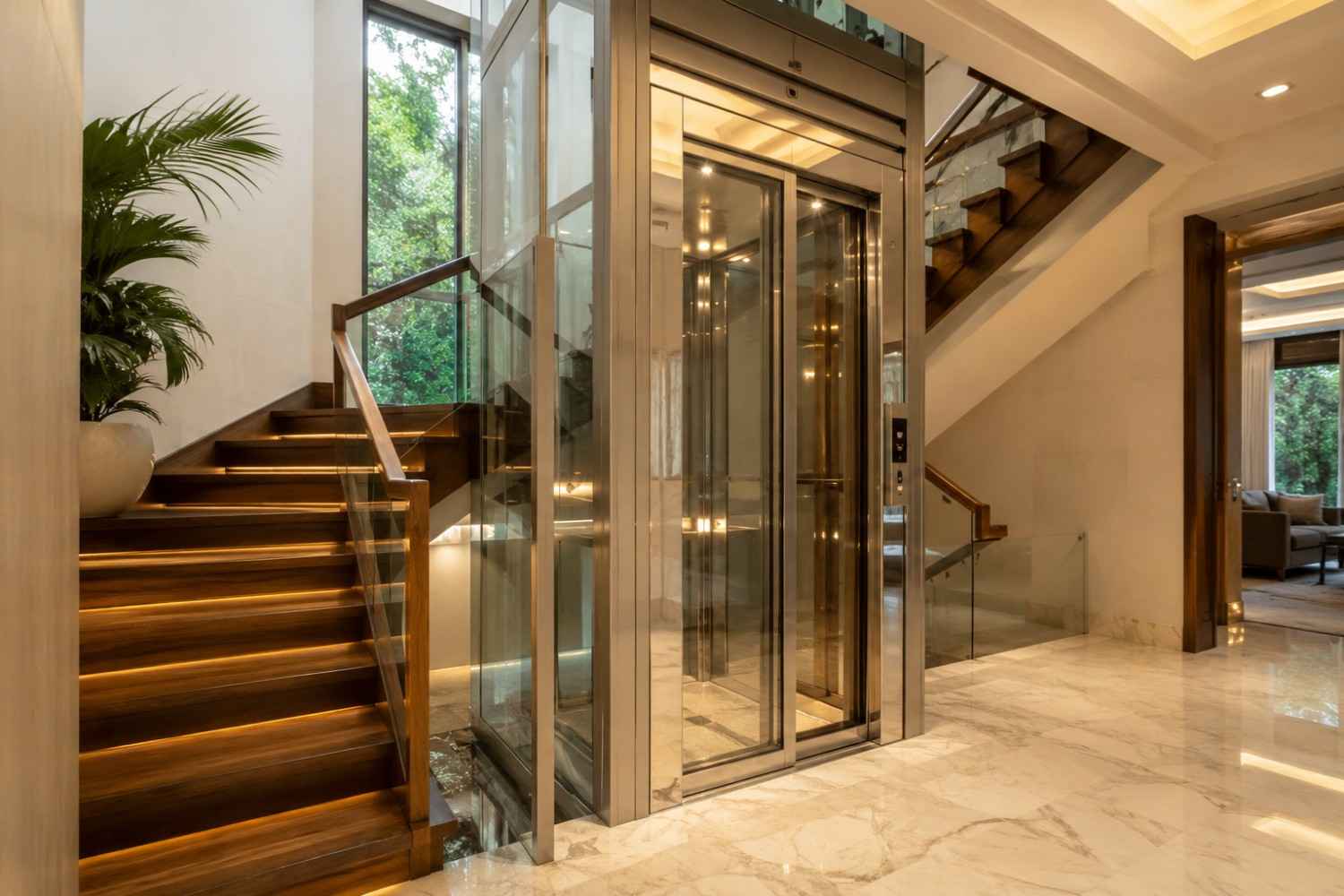
Stainless steel vs. glass panels, LED lighting, mirror finishes, wooden interiors — these aesthetic choices can shift the price by a noticeable margin. A capsule or panoramic lift, for instance, costs more simply because of the glass and structural engineering involved.
5. Safety Features
Automatic rescue devices, emergency alarms, overload sensors, battery backup systems, and door sensors all add to the base price — but they're not areas where you should cut corners.
6. Installation Complexity
If your home was built without a lift shaft planned in advance, retrofitting one will cost more than installing a lift in a home where the shaft space was designed from the start.
7. Brand and After-Sales Support
This one matters more than people realize. A cheaper lift from an unreliable manufacturer can end up costing more over its lifetime through repairs, part replacements, and poor service response times. Working with an experienced elevator manufacturer in India — one with a proper service network — often saves money in the long run.
Choosing the Best Lift for Home in India
There's no single "best" lift — the best lift for home in India depends entirely on your building, your budget, and your family's needs. Here's a simple way to think about it:
- Limited space, modern home: Go for an MRL lift — compact, efficient, and doesn't need a separate machine room.
- Villa or independent house with basement access: Hydraulic lifts are a reliable, smooth option.
- Tall home (4+ floors), want speed and efficiency: Gearless traction lifts perform best over longer travel heights.
- Want a design centerpiece: Capsule or panoramic lifts double as an architectural feature.
- Elderly family member, tight budget, no space for a full lift shaft: A stairlift is a practical, lower-cost alternative.
At Carrymax Lifts, this is exactly the kind of conversation we have with homeowners every day — understanding the layout, the budget, and the actual daily use case before recommending a lift type. A elevator is a 15–20 year investment, so it's worth getting the fit right the first time.
Hidden Costs People Often Forget
When budgeting for a home elevator, most people only account for the machine and installation. But there are a few additional costs worth planning for:
- Civil work: Shaft construction, pit preparation, and reinforcement (especially in retrofits)
- Electrical work: Dedicated power backup and wiring
- Annual Maintenance Contract (AMC): Usually ₹15,000–₹40,000 per year depending on lift type
- Government approvals: Some states require lift installation permits or inspections
- Insurance: Optional but recommended for high-value installations
Budgeting an extra 10–15% over the base machine cost usually covers these without surprises later.
How Long Does Installation Take?
For a straightforward home lift with the shaft already built, installation typically takes 3 to 6 weeks. If civil work (shaft construction) is needed from scratch, add another 4 to 8 weeks depending on the complexity of your home's structure.
Maintenance: What It Costs Over Time
A home elevator isn't a one-time purchase — like a car, it needs regular servicing. Most manufacturers, including Carrymax Lifts, recommend at least one professional service visit every year, with more frequent checks for high-usage households. Annual maintenance typically covers safety checks, lubrication, cable inspection, and software/control panel diagnostics. Skipping maintenance is the single biggest reason lifts develop expensive problems later, so it's not an area to save money on.
Why the Right Manufacturer Matters More Than the Lowest Price
It's tempting to go with whichever quote is cheapest, but a home elevator is a long-term investment in your family's daily comfort and safety. When comparing manufacturers, look at:
- Years of manufacturing experience
- Availability of spare parts locally
- Response time for service requests
- Safety certifications and compliance
- Customization flexibility
- Genuine customer reviews, not just website testimonials
Carrymax Lifts has built its reputation in Faridabad and across Delhi NCR by focusing on exactly these fundamentals — reliable manufacturing, transparent pricing, and dependable after-sales support — rather than competing purely on the lowest quote.
Final Thoughts
Home elevator costs in India in 2026 typically range from around ₹1.5 lakh for a basic stairlift to ₹25 lakh or more for a fully customized panoramic lift, with most family homes falling somewhere between ₹9 lakh and ₹18 lakh depending on floors, type, and finish. The right number for you depends on your home's structure, your family's needs, and how much you value long-term reliability over the cheapest upfront quote.
If you're still weighing your options, the smartest first step isn't picking a lift type — it's getting a proper site consultation. A good manufacturer will look at your actual home, not just quote you a number over the phone.