Modern luxury home architecture values transparency, fluid spatial transitions, and natural illumination. In high-end duplex apartments, luxury bungalows, and contemporary multi-tiered villas, vertical transportation is no longer hidden away behind heavy concrete walls or enclosed masonry shafts. Instead, forward-thinking interior designers and property owners treat vertical mobility as a central artistic statement.
Integrating glass residential home elevators into your property design seamlessly combines modern architectural beauty with essential domestic convenience. This approach transforms a functional mechanism into a striking visual centerpiece.
Historically, domestic elevators were modeled after commercial systems, using heavy steel enclosures and enclosed cabins that made interior spaces feel dark and small. Today, modern residential design trends focus on creating open, bright spaces.
Transparent capsule cabins and sleek structural steel frame shafts allow natural light to move freely through a home, keeping sightlines clear and rooms feeling spacious. This architectural analysis explores the key design trends shaping the adoption of panoramic glass residential home elevators, helping you select a beautiful and functional addition to your home layout.
Quick Answer: What Makes Glass Residential Home Elevators the Leading Trend?
Glass residential home elevators utilize premium laminated safety glass paneled cabins paired with minimalist structural steel or aluminum frames. By eliminating opaque concrete hoistways, these transparent lifts allow natural ambient light to flow freely across floors, preserve architectural views, and integrate into central home locations like wrap-around staircases. This blend of style and function makes them a top choice for modern luxury homes.
Trend Analysis: The Shift Toward Transparent Home Mobility
Understanding the evolution of luxury home design helps explain why transparent vertical mobility has become so popular. In upscale housing markets across major metropolitan centers, residential layout trends focus on open floor plans, minimalist lines, and bright interiors. Introducing a solid, dark elevator shaft into a light-filled living area or an open-concept foyer breaks the spatial flow and compromises the home's aesthetic value.
Panoramic glass installations address this structural challenge. Rather than blocking sightlines, a glass lift car serves as a dynamic, moving sculpture that connects different living zones without creating visual barriers.
Whether positioned inside an open entrance atrium, built in the center of a winding staircase, or mounted against an external glass wall to overlook an outdoor pool or courtyard garden, a glass lift provides passengers with a smooth ride and clear views, enhancing the overall home experience.
Modern Design Trends: 5 Architectural Styles for Glass Elevators
The luxury residential market features several innovative design styles tailored to complement distinct interior themes.
1. The Circular Capsule Concept
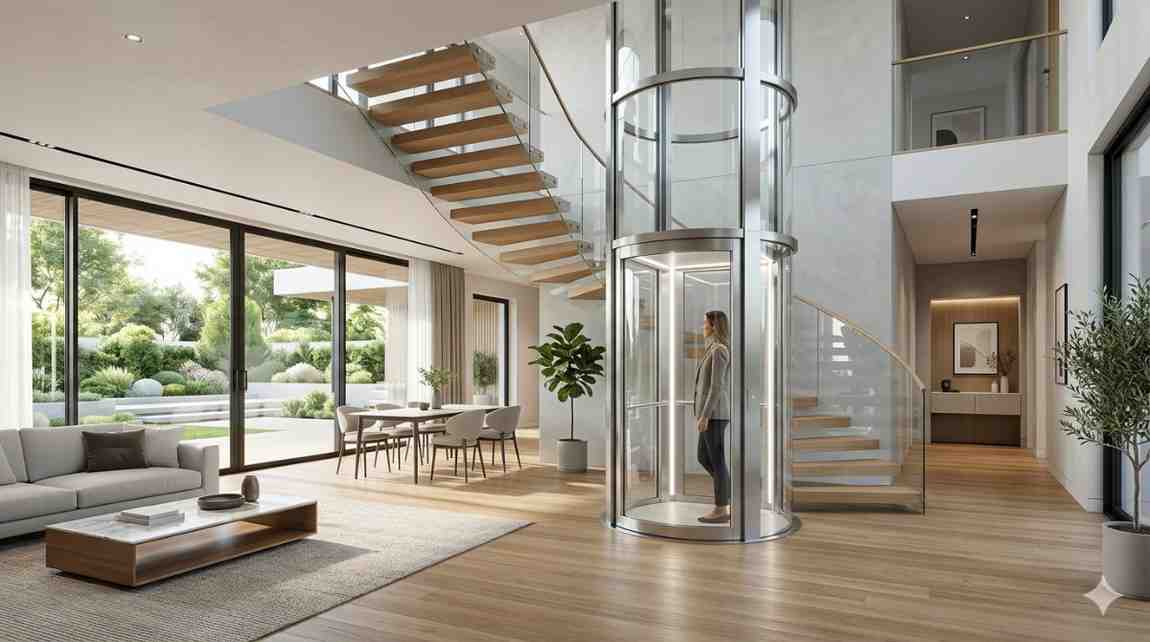
A major design trend in premium properties is the installation of completely round or curved glass capsule lifts. These circular structures remove sharp angles from a room, creating a soft, elegant vertical profile.
They are often installed in the open center of a curved staircase or placed in the corner of an open living room. These curved systems typically feature smooth, curved automatic sliding glass doors that match the cabin's round shape, providing a sleek look and quiet operation.
2. Frameless Glass Hoistways with Minimalist Hardware
For homes with clean, minimalist interiors, architects often choose frameless glass elevator shafts. These structures utilize heavy-duty, structural glass panels joined together by slim stainless steel spider fittings or low-profile floor tracking channels.
By removing thick structural corner posts, the elevator appears almost invisible when parked, allowing the surrounding interior design, artwork, or natural view to remain the primary focus.
3. Bold Structural Metal Finishes
While clear glass provides transparency, the supporting metal framework offers an opportunity to complement your home's color palette. Modern customization options extend well beyond standard industrial stainless steel:
Matte Black and Charcoal Framework: Provides a bold, contrasting look that pairs well with industrial loft aesthetics, natural wood finishes, or minimalist white interiors.
Champagne Gold and Rose Copper PVD Coating: Adds a warm, luxurious feel that fits beautifully with classic luxury interiors, premium marble flooring, and ambient lighting.
4. Integration Within Winding Staircase Cores
A popular spatial layout involves placing a rectangular or hexagonal glass elevator shaft directly into the open center of a wrap-around staircase. This integration optimizes unused space within the stair core, turning it into a functional design feature. The transparent walls ensure that the staircase stays bright, open, and visually accessible.
5. External Panoramic Glass Additions
When retrofitting a lift into an existing home where interior space is limited, installing an external glass lift shaft along an outer wall is an excellent solution. This creates a striking architectural element on the home's exterior while providing passengers with scenic outdoor views during travel. This approach adds vertical interest to the building's exterior without reducing interior carpet area.
Technical Insights: Drive Technologies for Transparent Systems
Selecting the right mechanical drive is essential when designing a panoramic glass elevator. The underlying mechanism directly impacts ride smoothness, sound control, and how cleanly the system integrates into your home's design. Let us look at how different drive options compare for glass installations.
Machine Room-Less Traction Systems
Machine Room-Less traction technology is highly popular for glass installations. These systems use a compact gearless motor mounted directly onto structural rails at the top of the shaft, eliminating the need for an external engine room. For a glass lift, an MRL setup is ideal because it hides control wiring and mechanical components within slim structural tracks, keeping the view clean and uncluttered.
Hydraulic Drive Systems
When comparing a hydraulic lift vs traction lift setup for a glass elevator, traditional hydraulic systems have some limitations. Hydraulic lifts use an underground cylinder or a side-mounted piston to push the car upward, which can be visible through clear glass walls.
Additionally, hydraulic systems require a separate fluid tank cabinet on the ground floor and use specialized oils that can emit a faint chemical odor, which may not be ideal for open-plan living areas.
Debunking Common Glass Elevator Myths
As more homeowners choose glass residential home elevators for their properties, a few common myths about glass safety and performance persist. Clarifying these misconceptions helps buyers make informed decisions.
Myth 1: Glass elevators are fragile and unsafe for daily residential use
Fact: This is a very common concern among families with young children or elderly relatives. However, residential glass lifts do not use ordinary window glass. They are built using thick, multi-layered laminated safety glass or toughened tempered panels that comply with strict global safety standards.
This material is designed to withstand heavy physical impacts without cracking or shattering, ensuring excellent structural safety and peace of mind.
Myth 2: Transparent lift cabins heat up quickly and feel uncomfortable
Fact: Homeowners sometimes worry that an external glass lift or one positioned near a large window will create a greenhouse effect, making the cabin uncomfortably hot. Modern panoramic elevators solve this by using specialized double-glazed glass paneled sections treated with low-emissivity UV-reflective coatings.
These advanced coatings block solar heat transfer while letting clear light pass through, keeping the cabin comfortable. Additionally, integrated ventilation fans maintain fresh airflow during travel.
Myth 3: Keeping glass elevator panels clean requires too much effort
Fact: While glass panels do show smudges over time, modern material treatments make maintenance straightforward. Many premium glass elevators feature specialized anti-fingerprint and hydrophobic coatings applied during manufacturing.
These protective layers resist dust and smudges, allowing the glass to be easily cleaned with a simple microfiber cloth and standard glass cleaner during regular home cleaning.
Why Choose CarryMax Lifts
Bringing a sophisticated glass elevator project to life requires specialized manufacturing expertise and careful attention to detail. CarryMax Lifts specializes in crafting premium, custom panoramic mobility solutions that blend seamlessly with modern luxury home architecture.
Partnering with CarryMax Lifts for your residential lift installation offers several key benefits:
Extensive Industrial Experience: Our design and engineering teams understand how to integrate glass lifts into complex residential layouts, helping you maximize space and light.
Precision Manufacturing Quality: We utilize advanced manufacturing technologies to build durable steel frameworks and perfectly aligned glass panels for reliable, long-term performance.
Tailored Customization Flexibility: From curved capsule designs to custom metal finishes like matte black or champagne gold, we adapt our lifts to match your interior style perfectly.
Strict Safety Compliance: Every elevator we build meets rigorous elevator safety standards India, featuring comprehensive multi-tier mechanical brakes, emergency battery backups, and smooth automatic doors.
Strong Service Footprint in Delhi NCR: With a responsive technical support network across Delhi, Noida, Gurgaon, Ghaziabad, and Faridabad, we provide dependable onsite coordination, licensing guidance, and routine lift maintenance services.
Whether you need a specialized goods lift supplier for industrial projects or a custom commercial lift installation, CarryMax Lifts delivers high-quality engineering solutions tailored to your unique requirements.
Conclusion: Elevating Modern Spaces with Transparent Design
Choosing a glass elevator is an excellent way to combine premium luxury with practical accessibility in your home. By moving away from dark, traditional concrete shafts, modern panoramic lifts enhance your interior design by letting natural light move freely through your living spaces while preserving clear architectural views.
With advanced options like Machine Room-Less traction motors, minimalist steel frames, and high-strength safety glass, a modern elevator offers quiet, energy-efficient performance and long-term durability. Working with an experienced manufacturer ensures your glass lift is perfectly tailored to your space.
Get in touch with the architectural consulting team at CarryMax Lifts today to explore our custom design options, request layout drawings, and receive a tailored technical proposal for your residential project.